Application translation
A fiber network tester brief starts from the span, not from a copper wiremap. LinkScope Sourcing 57 helps a buyer write wavelength, connector, and loss questions so factories quote the same optical task. The desk does not calculate a link budget for the project and does not approve a connector end-face.
The dispute is practical. Single-mode plant is often discussed with 1310 nm and 1550 nm launch notes when the reach is long. Multimode plant in a hall is often discussed with 850 nm and sometimes 1300 nm, on OM3 or OM4 fiber the designer already specified. Quoting one handheld for both without a wavelength list mixes two jobs.
Longer outside-plant or campus spans need the wavelength the design used. Ask the supplier which source wavelengths the model actually emits, and whether a visual fault locator at 650 nm is a separate accessory. Optical budget remains a design calculation. The tester, if it reports loss, needs the insertion loss method printed on the sheet.
Short hall links can be cheaper to test when the fiber, the launch cord, and the meter agree. A multimode reading does not validate a single-mode splice. Return loss, when required, is a different setup from a simple light and power meter pair. Write which one the crew will perform.
| Project fact | What to request | What not to assume |
|---|---|---|
| Connector | LC, SC, or a hybrid the tray already uses | An adapter in the pouch mates every port |
| Loss check | Insertion loss at the stated wavelength, with the reference method | A continuity lamp equals a 0.5 dB discussion |
| Environment | Indoor aisle or an outdoor enclosure, plus ingress protection if the sheet has an IP code | A rack-unit enclosure rating applies to a handheld |
| Evidence | Calibration traceability for the meter serial, if a certificate is offered | A copper tester certificate covers the optical source |
ITU-T optical-fibre recommendations and IEEE 802 overviews supply words for the brief. They do not certify the meter a supplier names. FCC equipment files, when radio is absent, may not apply. Ask the supplier which file, if any, names this exact model.
Stage the purchase in three checks. First, the designer states fiber mode, wavelength, connector, and whether the task is identification, loss, or both. Second, each quote lists the source, the power meter, the launch cords, and the exclusions such as a microscope or a cleaning kit. Third, incoming inspection uses the reference method on the sheet, not a new method invented at the dock.
Measurement accuracy for an optical power reading is the uncertainty the certificate states, often discussed in dB or as a percent of reading. Copy the unit from the file. Do not invent a tighter number to make quotes look aligned. Connector mating cycle life, if the sheet prints a count such as 500 cycles, is a wear note for the port on the meter, not a statement about the plant connectors.
Sourcing scenario from a two-building campus: the background is a 1.2 km single-mode lateral at 1310 nm with LC trays, plus a separate multimode riser at 850 nm inside building B. The process is to request two quote columns, one per wavelength set, and to mark a shared visual fault locator as optional. The result is a comparison that does not average a copper network cable tester for sale price into the optical column. Related copper names stay on the catalog.
Wavelength drift, dirty end-faces, and a mismatched launch cord can move a loss reading more than the meter uncertainty. Those limits belong in the buyer acceptance note. Dispersion and receiver sensitivity are link-design topics for the transceivers, not automatic fields on a handheld unless the model is an OTDR and the sheet says so. Channel width and MIMO do not belong on this fiber brief.
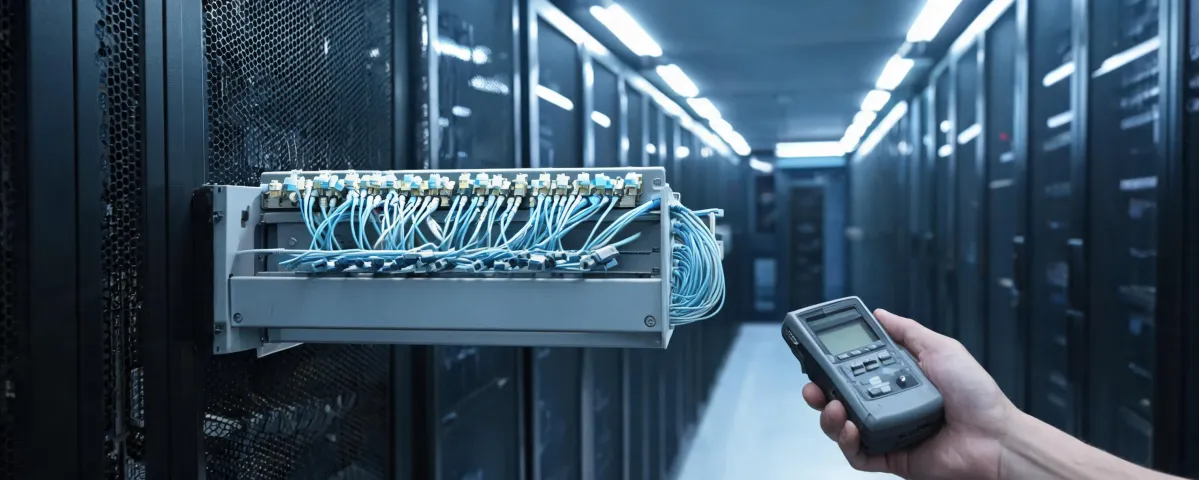
Write mode, wavelength, connector, quantity, US destination, and timing. Factory quotes can then be lined up on one optical scope. Open the form on the requirement desk or use the panel below.
Qualified briefs can include sourcing support of up to 3%.
Eligibility applies to qualified business buyers and is confirmed after we review your product, quantity, destination, and sourcing requirements.
Prepare a Telecom RFQ